
I need to get this off my chest, this headline that comes up every year during the holidays . . . You’ve probably seen the fear-based headlines like, “People gain 10 pounds over the holidays!” — and maybe it’s made you feel a little anxious about the upcoming celebrations, events, and irresistible holiday treats.
But here’s the good news (and the truth):
❌ Most people do NOT gain 10 pounds during the holidays.
Let’s walk through what actually happens this time of year and how you can enjoy your favorite foods, traditions, and moments — without stress, guilt, or restriction.
The Holiday Weight Gain Myth — What the Research Really Says
One of the most common holiday nutrition myths is that people gain massive amounts of weight between November and January. But research consistently shows that the average holiday weight gain is around 1–3 pounds — not 10.
Most of that fluctuation comes from:
- Higher sodium foods
- Water retention
- Temporary changes in routine
- Stress and disrupted sleep
- A bit more emotional eating
- Skipping meals and overeating later
In other words:
Your holiday body changes have more to do with your habits and stress levels — not the single slice of pie you enjoyed at Christmas dinner.
Why It Feels Like You Gained More Weight
Even though actual fat gain is minimal, it’s normal to feel heavier this time of year. Holiday routines often include:
- More meals outside your typical schedule
- Saltier restaurant or party foods → increased bloating
- More carbs → higher glycogen stores → added water weight
- Higher stress → increased cortisol → more fluid retention
So yes, your jeans might feel tighter, and the scale may climb a few pounds — but these changes are temporary. Once routines normalize, most of this settles naturally.
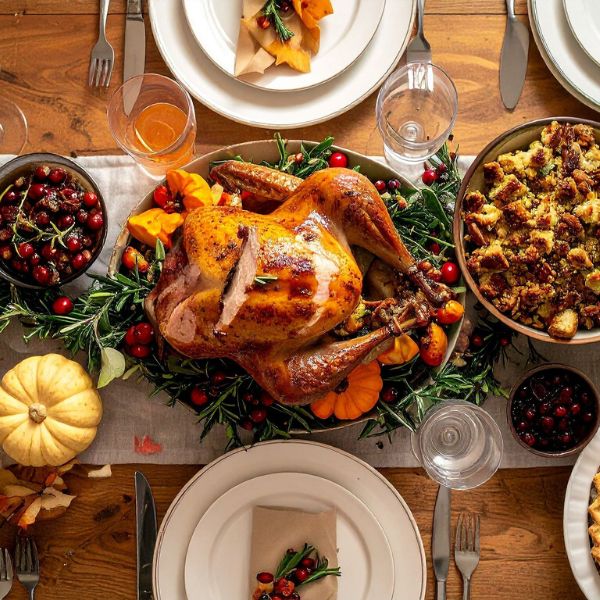
How to Feel Good and Enjoy Holiday Eating (Without Food Guilt)
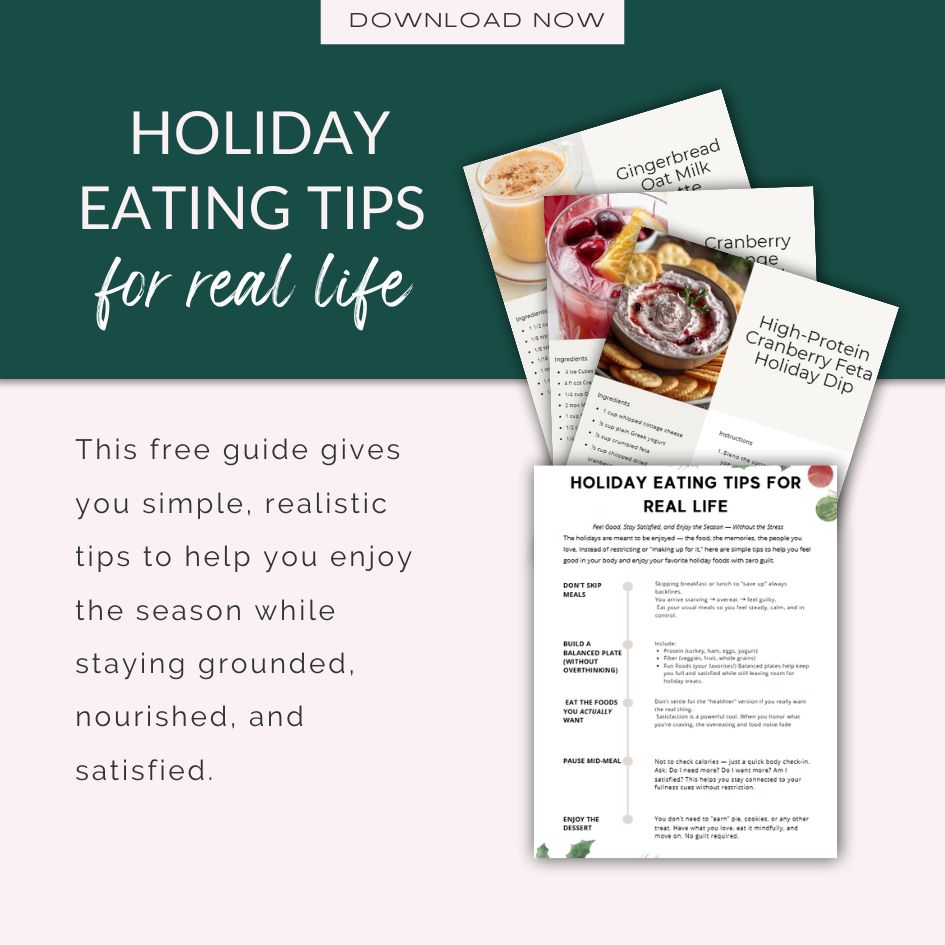
Here are practical, realistic, non-diet tips that help you enjoy the holidays and support your health:
Don’t “save up” for big meals
Skipping breakfast and lunch to “make room” leads to overeating later.
Instead, eat balanced meals with protein + fiber so you show up satisfied, not starving.
Choose the foods you truly love
You don’t need to “earn” or “burn off” holiday treats.
Skip the foods you don’t care about and savor the ones you do.
Pause halfway through your meal
Check in with your body:
- Do I want more?
- Am I satisfied for now?
There are no wrong answers — just information.
Add movement that feels fun
Movement doesn’t have to be a workout. Try:
- A family walk
- Dancing while you cook
- A quick strength routine
- Playing with kids outside
Don’t panic about the scale
Holiday fluctuations are normal, expected, and temporary.
Your long-term habits matter more than anything you eat in December.
You’re Allowed to Enjoy This Season — Fully
Food is connection. Tradition. Nostalgia. Celebration.
It’s comfort and culture. It’s memories.
And leaning into that is not unhealthy — it’s human.
A handful of festive meals will never outweigh the impact of your consistent habits, your mindset, and how you care for yourself the other 360 days of the year.
Final Takeaway: Your Health Isn’t Defined by December
Let’s ditch the fear-based headlines and focus on what actually matters:
- Feeling good in your body
- Being present with the people you love
- Enjoying holiday foods without guilt or stress
Most people gain 1–2 pounds during the holidays — and much of that is water, normal shifts, and routine changes.
You’re allowed to enjoy this season, every bite of it, and still feel great in January. If this post helped you breathe a little easier, share it with a friend who might be feeling the holiday food pressure too.
Wishing you a joyful, nourishing, stress-free holiday season.
Check our free guide!